
Additions and new construction
New Roofs in Norwalk, CT
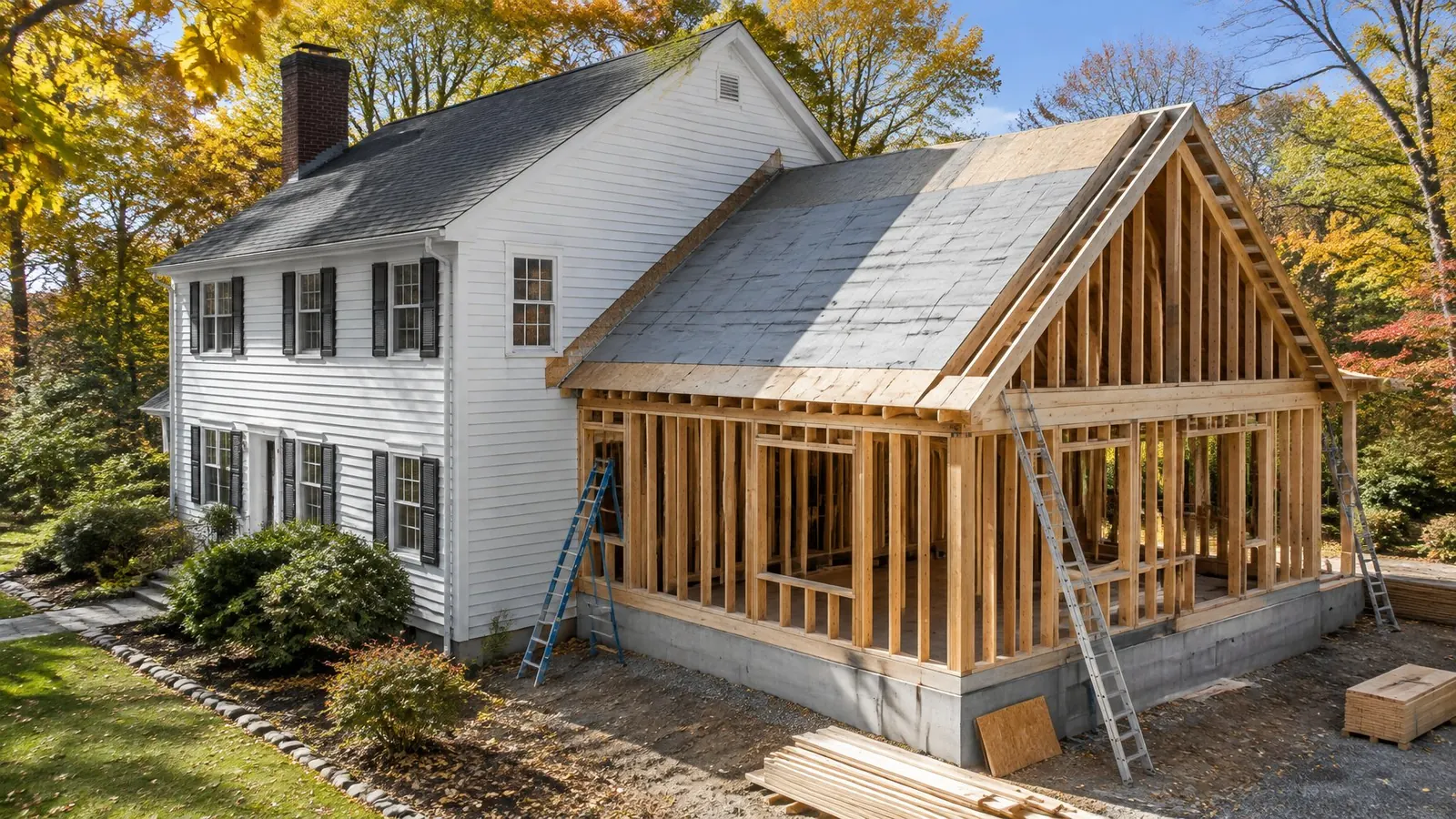
Building an addition, adding a dormer or putting up a new house? Call and you are connected with an independent roofing contractor that installs new roofs around Norwalk.
Calls answered Mon–Fri 8:30am–7pm, Sat 9am–4pm ET
A new roof starts with the plans
On an addition or a new house the roof is designed with the framing: pitch, overhangs, how snow will slide and where water will go. The roof covering is chosen to suit the pitch, and where the new section meets the old roof the two have to shed water as one.
The joint between old and new is where new work most often leaks. A careful contractor opens up the existing roof far enough to flash the tie-in properly and tells you early if your existing shingle, slate or cedar can't be matched closely.
Before you sign
Questions for a new roof
Who designs it?
Additions need drawings for the building permit. Ask whether the roofer works from your architect's or builder's plans.
Pitch and material
Low pitches rule out some shingles and slate. The pitch decides what can go on.
The tie-in
How the new roof joins the old, and whether part of the existing roof is redone to make the joint right.
Matching
Whether your current material is still made, and what happens if it isn't.
Inspection order
Framing and sheathing have to be inspected before they are covered up. Know who books which inspection.
Who you contract with
On a bigger project the builder may hire the roofer. Know who is responsible for the roof.
Common projects around Norwalk
Typical work includes second-floor additions on capes, shed and gable dormers, rear additions and mudrooms with low-slope roofs, garages, and full rebuilds. On shoreline lots, flood rules can shape the whole project before the roof is even discussed.
One legal point: Connecticut's Home Improvement Act covers work on existing homes, and its definition leaves out the construction of a new home (C.G.S. 20‑419). An addition to your house is a home improvement; a brand-new house is built under a different set of rules for new home construction contractors.
Questions
New Roofs: common questions
Does a roof on an addition need its own permit?
The addition is normally permitted as one project that includes the roof. In Norwalk, permits come from the city's Building & Code Enforcement office; in the nearby towns, from each town's building department.
Will the new roof match the old one?
Often closely, not always exactly. Shingle colors fade and lines are discontinued, and old slate and cedar weather. Some owners replace the whole roof at the same time so it all matches.
Should the roofer or the builder handle the roof?
Either works. What matters is that the contractor is registered for the work, carries insurance, and that one company is responsible for the tie-in.
Roof types
Other roof types
- Roof ReplacementOld layers off, deck checked, ice barrier and underlayment down, new roof on, permit closed.
- Asphalt ShinglesThe everyday Connecticut roof: dimensional shingles over a proper ice barrier.
- Cedar RoofsShakes and shingles in natural wood, for shingle-style and older New England homes.
- Slate RoofsNatural slate for older homes: replaced by specialists, with copper flashing to match.
- Standing Seam MetalRaised-seam steel or aluminum panels that shed snow, often on farmhouses and porches.
- Low-Slope RoofsMembrane roofs for rear additions, porches, shed dormers and flat sections.
Planning the work?
Talk to a contractor about new roofs
One call puts you through to an independent roofing contractor serving Norwalk, Westport, Darien, New Canaan and Wilton. Ask for an inspection and a written price for the new roof.
Replacing your roof? Talk it through with a local roofing contractor.
Your call is connected with an independent roofing contractor that takes on roof replacements and new roofs in Norwalk and nearby towns.
Call (855) 365-0164Calls answered Mon–Fri 8:30am–7pm, Sat 9am–4pm ET
Calls may be recorded. Read the referral disclosure and privacy policy.