
Guide
Roofs on shoreline and historic homes
Two kinds of houses need a little more planning before the roof comes off: homes in a flood hazard zone, and homes in a local historic district. Here is what the cities and towns say.
Norwalk flood zones
Roofing counts toward Norwalk's flood-zone limit
Norwalk's flood hazard zone page explains that homes in a flood zone that are not flood compliant are limited in how much improvement they can receive. The city tracks the cost of improvements over a five-year period and restricts them to 25% of the structure's market value, using the Tax Assessor's records. Once that limit is reached, the home has to be made flood compliant before more improvements are permitted.
The city says it tracks all improvements, whether or not a zoning permit is needed, and names roofing, replacement windows and siding as examples. So if your house is in a flood zone, a new roof uses part of that five-year budget. Plan the roof together with any other work you have in mind, and talk to the city before you sign.
The page points to FEMA's flood map viewer for checking whether a property is in a mapped flood zone, and to Article 6 of the zoning regulations for the full rules.
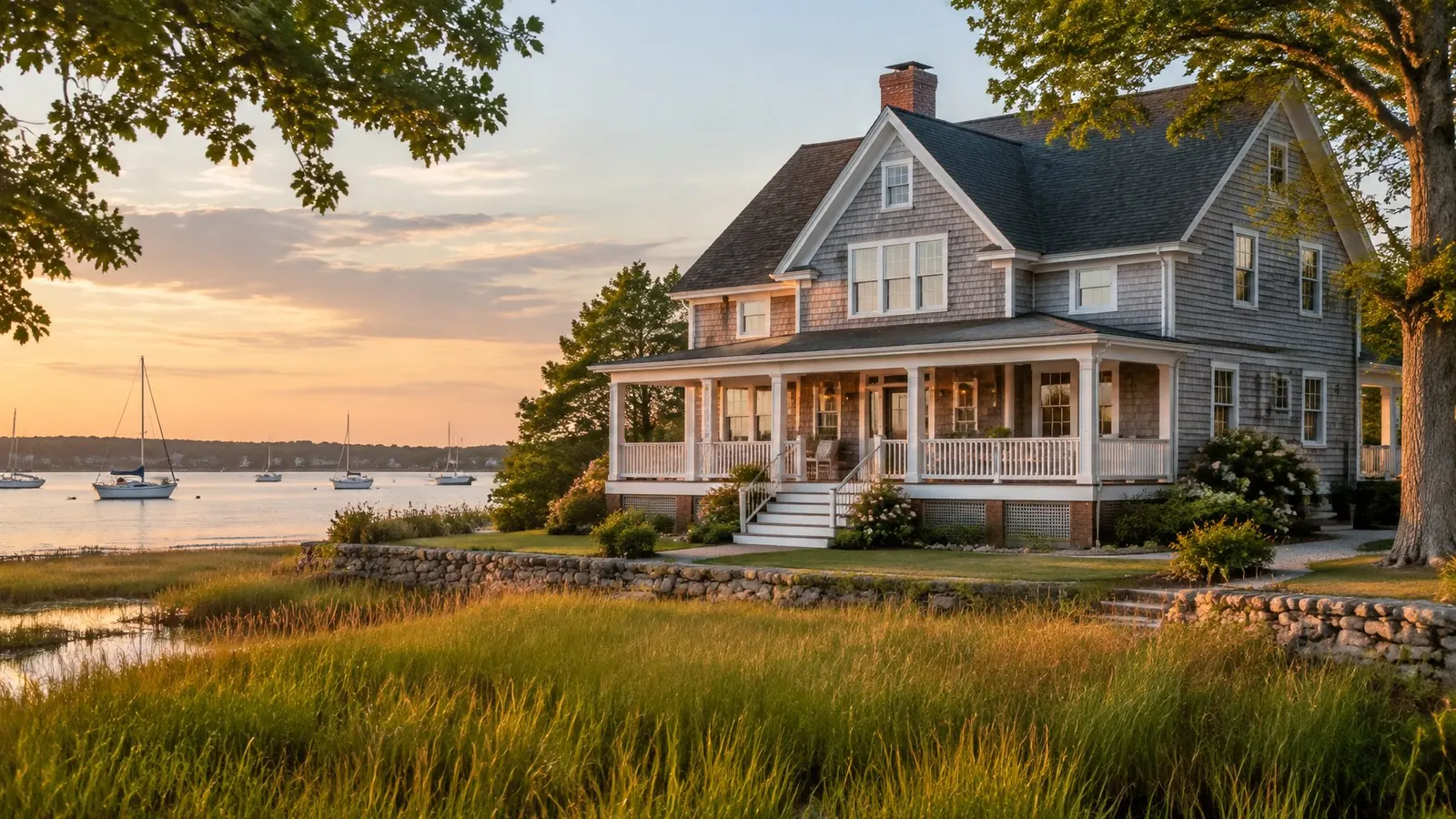
Rowayton
The Rowayton Avenue Village District
Norwalk has adopted design guidelines for the Rowayton Avenue Village District, effective February 19, 2024. The district covers the neighborhood commercial area near the Five Mile River. The guidelines apply to new construction, substantial reconstruction and rehabilitation in the district, and name pitched roofs, wood clapboards, brick and stone as common elements of traditional New England coastal communities.
If your building is in that district and the roof work goes beyond replacing like with like, ask Norwalk Planning & Zoning what the guidelines mean for it before work is scheduled.
Nearby towns
Historic district commissions
Westport
In a Local Historic District or Local Historic Property, the Building Department requires an approved Certificate of Appropriateness before it issues a building permit, unless the Historic District Commission certifies in writing that the work is not regulated. The commission decides within 65 days of officially receiving an application (Westport HDC).
Wilton
For a house in a historic district, a Certificate of Appropriateness is needed before significant exterior work visible from the public right of way, and the commission's FAQ lists replacing the roof as an example. It has no authority over maintenance and repair (Wilton HDPC FAQ).
Why it matters
Changing material, say from cedar to asphalt or from slate to synthetic, is the kind of visible change these commissions look at. Ask early and build the time into the schedule.
Checklist
Before you sign
- Check whether the house is in a mapped flood zone (the city page links to FEMA's viewer)
- If it is, ask the city how much of the five-year improvement budget is already used
- In Westport or Wilton, check whether the house is in a local historic district or is a local historic property
- Get any approval in writing and give the contractor a copy
Ready for a new roof?
Speak with a roofing contractor who works in Norwalk
One call puts you through to an independent roofing contractor serving Norwalk, Westport, Darien, New Canaan and Wilton. Ask for an inspection and a written price for the new roof.
Replacing your roof? Talk it through with a local roofing contractor.
Your call is connected with an independent roofing contractor that takes on roof replacements and new roofs in Norwalk and nearby towns.
Call (855) 365-0164Calls answered Mon–Fri 8:30am–7pm, Sat 9am–4pm ET
Calls may be recorded. Read the referral disclosure and privacy policy.